
How FDIC insurance keeps your money safe

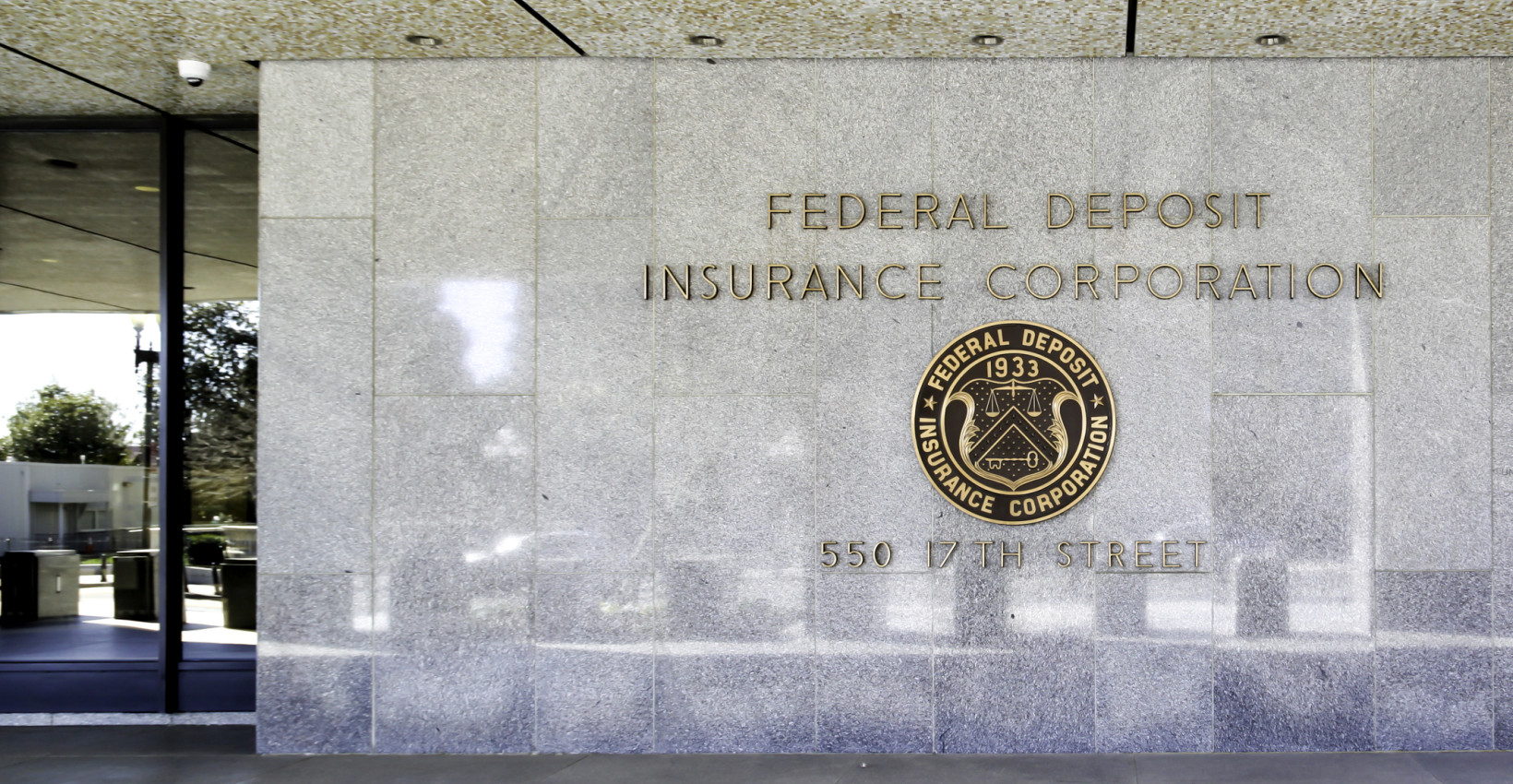
If you’ve done business with banks before, chances are you’ve at least heard of the Federal Deposit Insurance Corporation (FDIC). Still, many people don’t know exactly what the FDIC does, how it works, or when their personal funds are and are not insured. Read on to learn more about the FDIC and the effect it can have on your money.
What is the FDIC?
The FDIC describes itself as an independent agency created by Congress to maintain stability and public confidence in our nation’s financial system. The agency’s insurance protects the funds of accountholders, even in the unlikely scenario that the bank itself fails.
During times of financial hardship and crisis, FDIC insurance reassures depositors and prevents scenarios in which they may panic and rush to withdraw money from the bank. (Not-so-fun fact: These “run on the bank” scenarios contributed heavily to the severity of the Great Depression in the early 1930s.) Meanwhile, during the savings and loan crisis of the 1980s and 1990s, the FDIC played a large role in managing the collapse of many financial institutions and paying out funds to affected depositors.
How much money does FDIC insurance cover?
The FDIC covers up to $250,000 per depositor, per insured financial institution, spanning across all accounts you’ve opened at that institution. Any amount in excess of $250,000 will still remain in your account at that institution, but it will be uninsured. For example, if you have $200,000 in a savings account and another $100,000 in a certificate of deposit (CD) at the same institution, that exceeds the FDIC’s limit by $50,000, meaning you have $50,000 uninsured at that institution.
What if I need more coverage?
If your balance across all UBT accounts exceeds $250,000, those excess funds are uninsured. That doesn’t mean you need to move the excess funds to another bank, however. UBT has solutions to get extra coverage, whether for your personal funds or your business. For more details, ask a local banker or reach out to our treasury management department.
What kinds of accounts are protected by FDIC insurance?
Checking accounts, savings accounts, CDs, and money market accounts are generally covered 100% by the FDIC, as well as joint accounts and employee benefit plans. However, FDIC insurance doesn’t cover certain other products like mutual funds, annuities, life insurance policies, stocks, and bonds. FDIC insurance is also available to businesses based on tax ID number.
To determine if your account type is covered, check out the FDIC website.
Are my funds FDIC-insured at UBT?
Yes, UBT’s deposit accounts are insured up to the allowed $250,000-per-depositor limited defined by the FDIC. Have questions about your account’s FDIC insurance and how you can maximize it? Stop by your local branch today and our friendly bankers would be happy to chat — or contact our Customer Support team at 800.297.2837.



Learning Center articles, guides, blogs, podcasts, and videos are for informational purposes only and are not an advertisement for a product or service. The accuracy and completeness is not guaranteed and does not constitute legal or tax advice. Please consult with your own tax, legal, and financial advisors.
